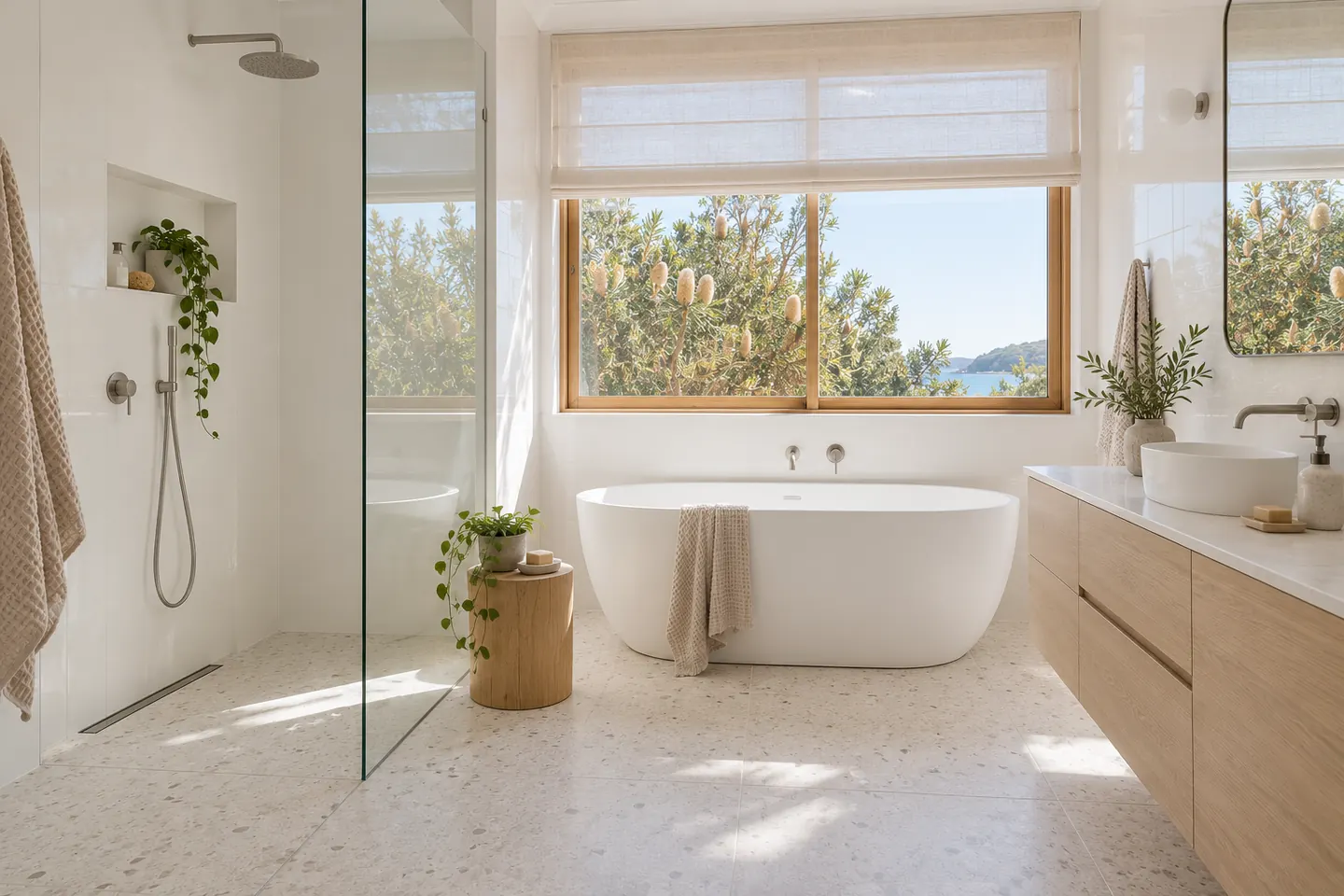
Bathroom Renovations
Main bathrooms taken back to frame and rebuilt with materials chosen to cope with salt air, sand and steam.
Northern Beaches Council area · Written quotes
Sea breeze through the window, wet towels on the hook, sand in the shower tray. A Northern Beaches bathroom has to be bright and easy to live with — and tougher than it looks.
Licence and insurance details are provided on your discovery call, or whenever you ask. Request them →
Main bathrooms taken back to frame and rebuilt with materials chosen to cope with salt air, sand and steam.
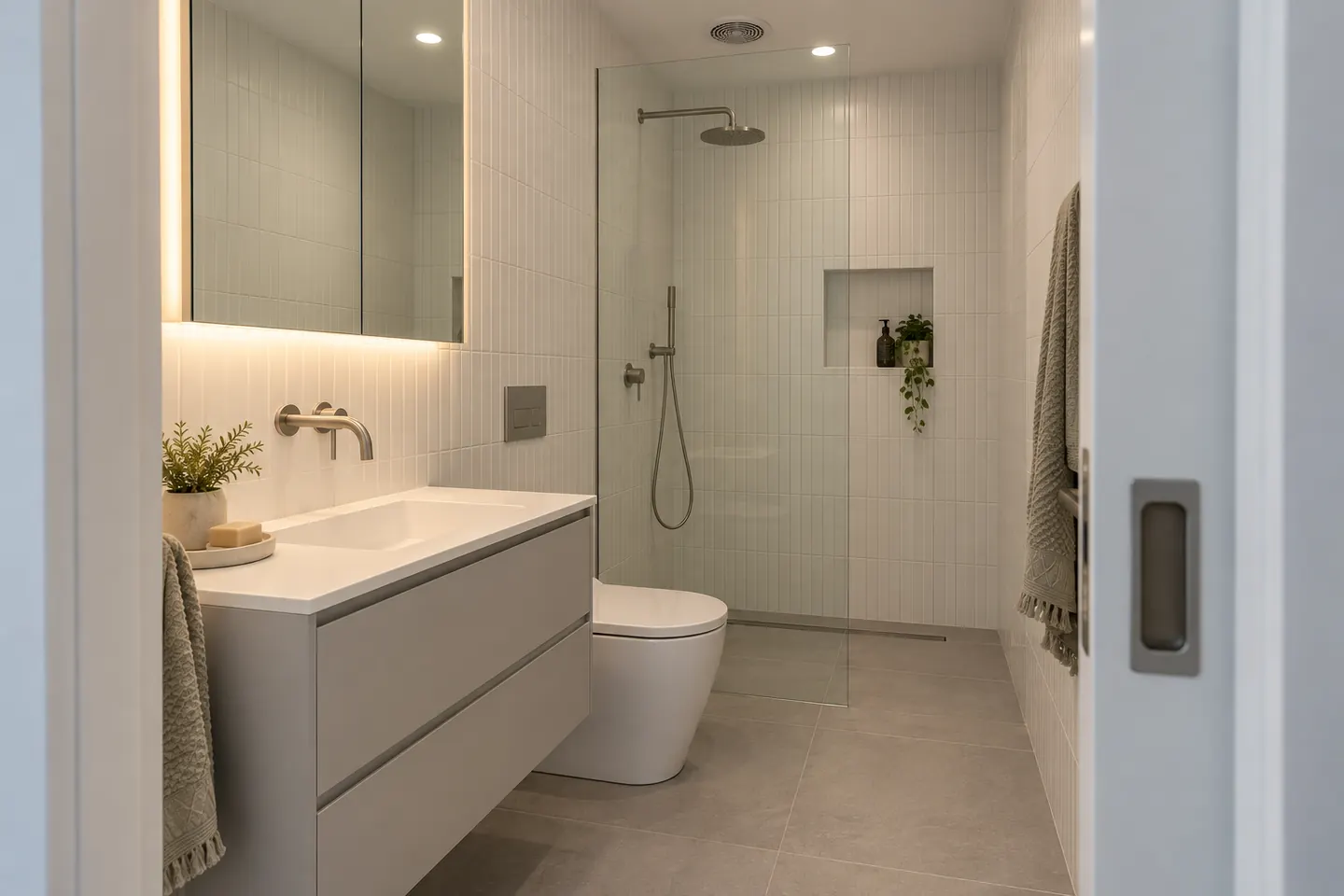
Ensuites squeezed beside a bedroom and powder rooms off a hallway — where ventilation and set-out decide whether the room works.
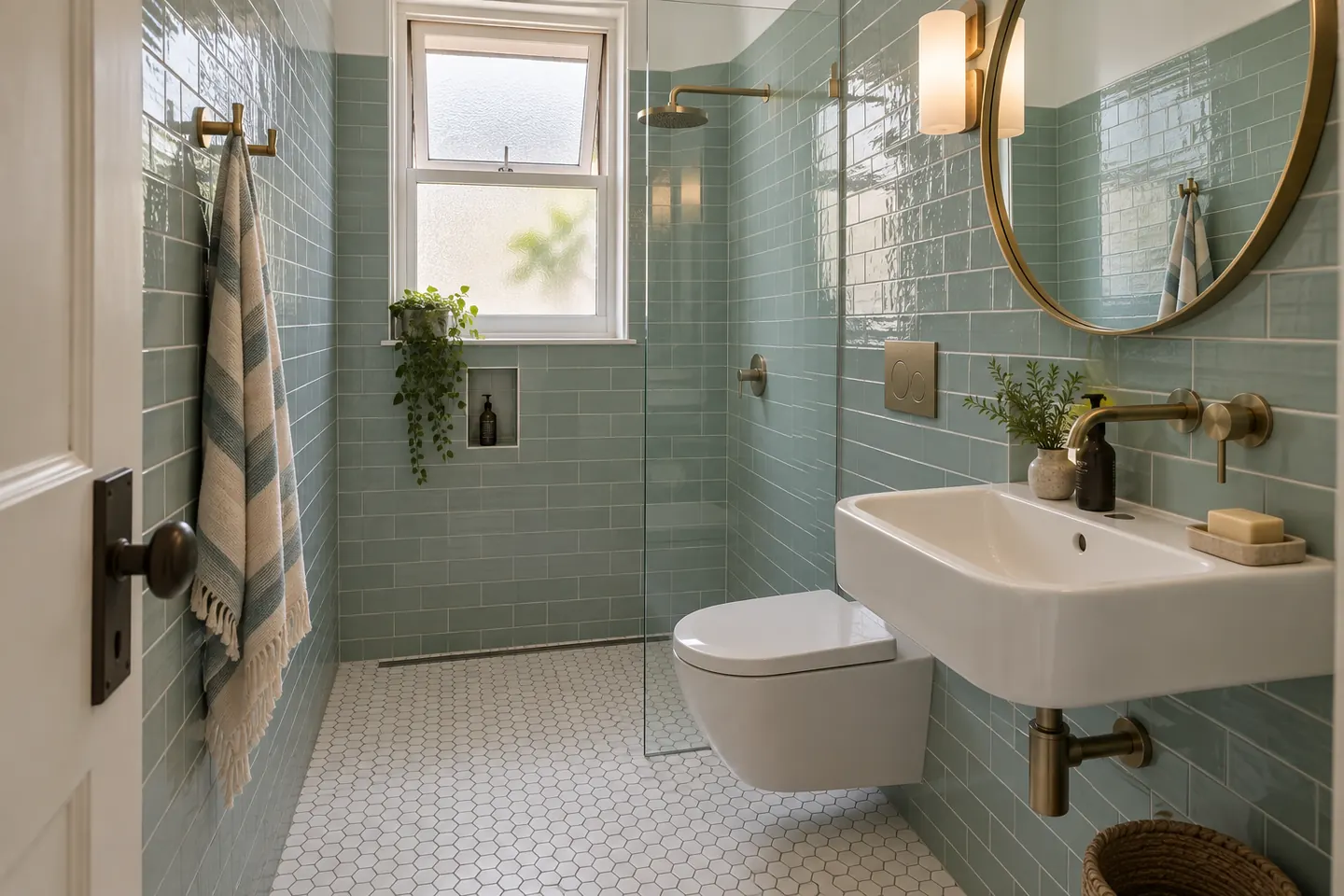
Compact bathrooms in walk-ups and beach units, planned around strata rules, fixed wastes and a lack of floor space.
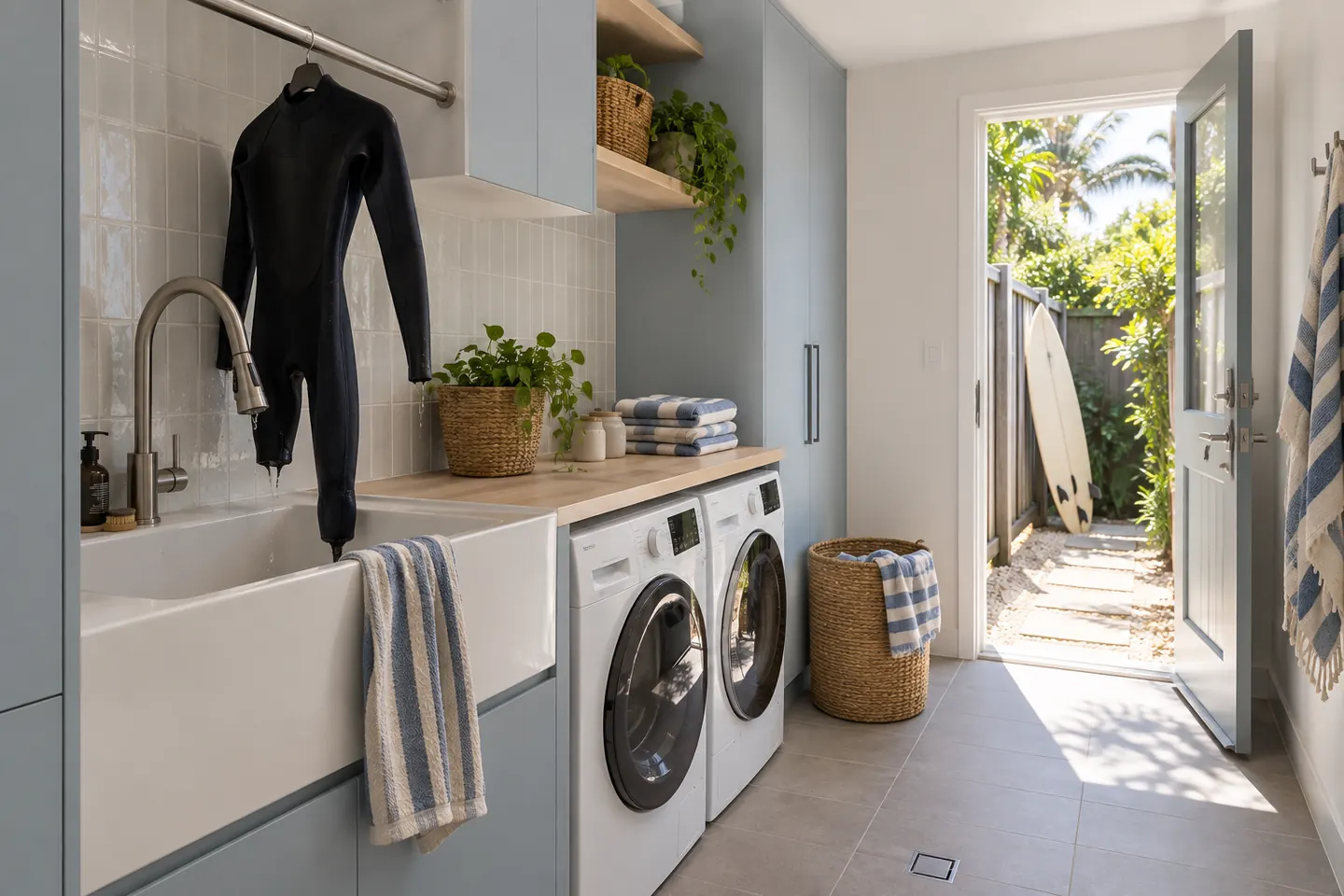
Laundries that handle wetsuits, sandy towels and a dryer that needs somewhere for its moisture to go.
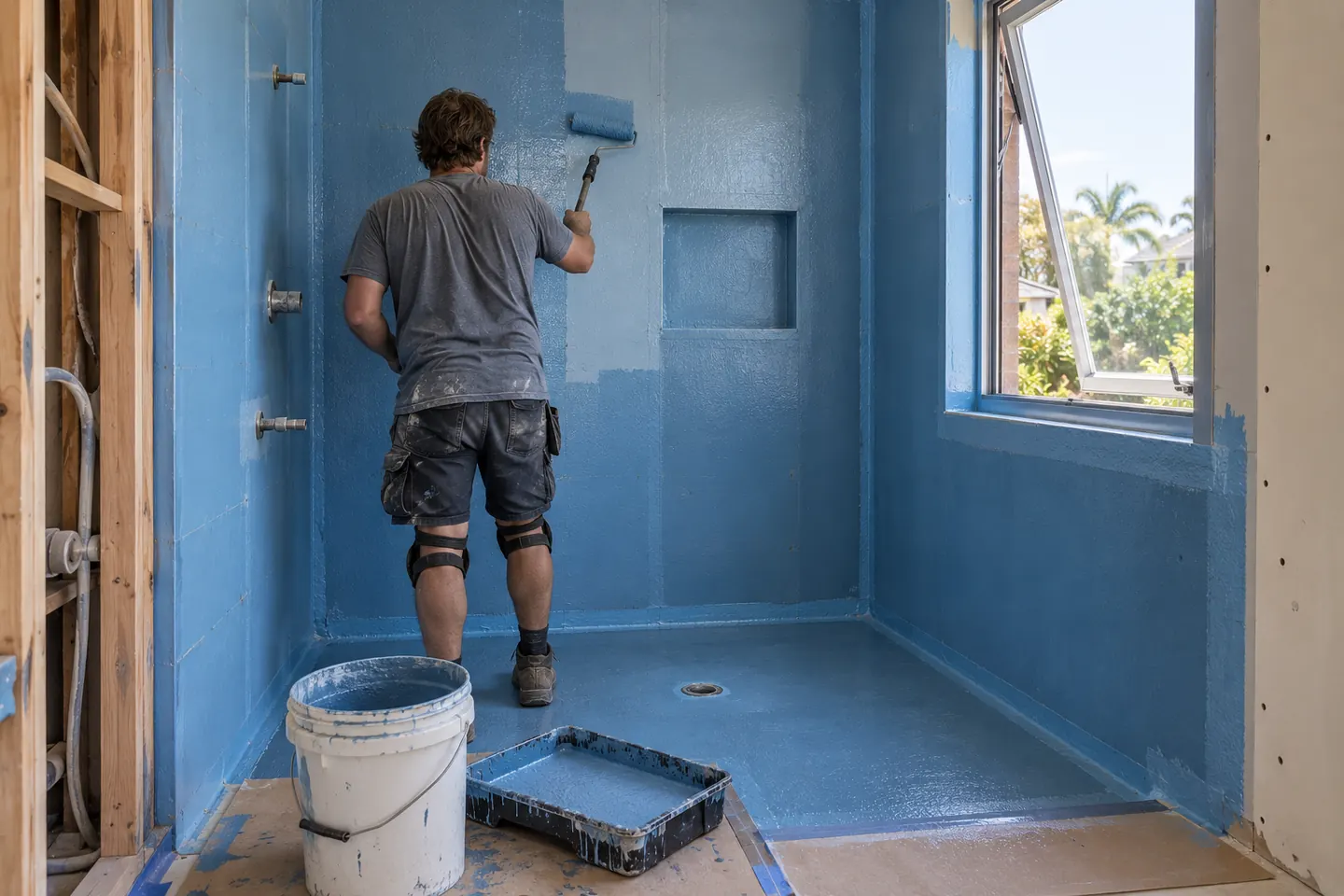
Membranes, falls, hobs and flashings — the concealed layer that decides whether a humid coastal bathroom lasts.
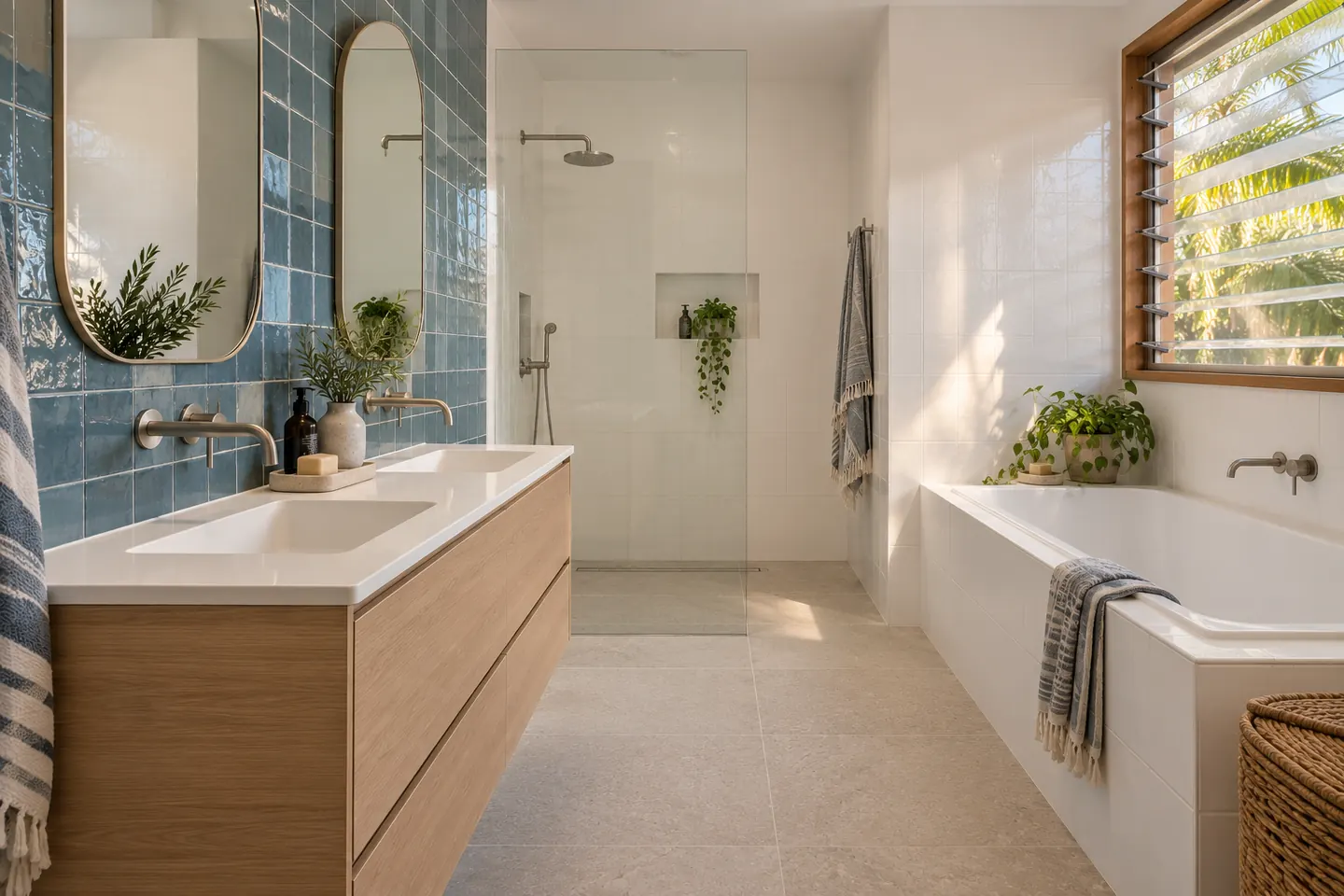
Porcelain, stone-look and textured tiles, epoxy or sealed grout, and slip resistance for wet, sandy feet.
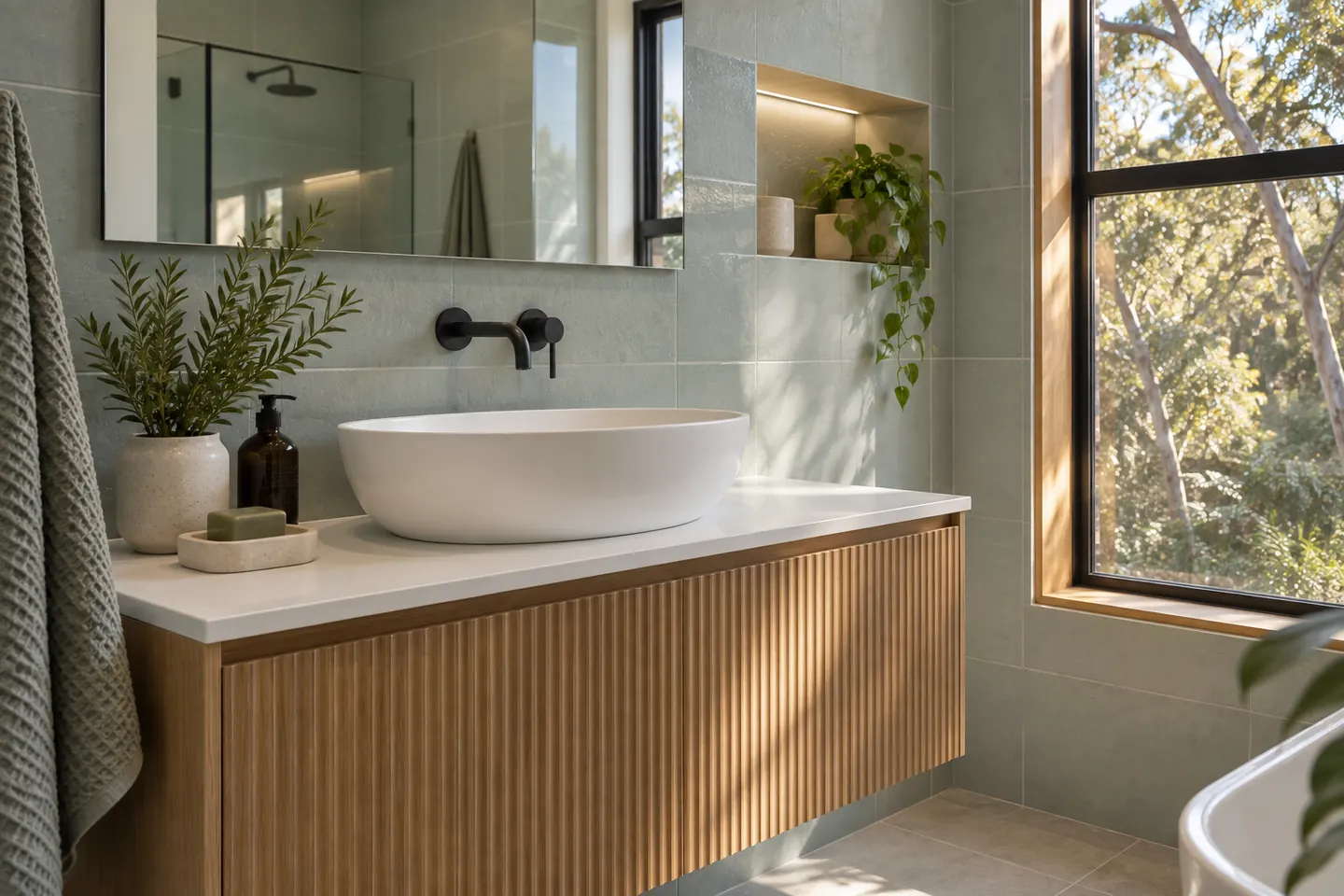
Vanities, shaving cabinets and linen storage built from materials that will not swell in beach-house humidity.
Fixings, tapware finishes, grout, board and ventilation chosen for air that is humid, salty and sandy most of the year.
An exhaust fan ducted outside, sized to the room, with a run-on timer — because mould is the default in a beach bathroom.
Fittings by model, tile allowance per square metre, membrane scope and cure time, skip and making good — all written down.
Renovation work is carried out in partnership with Coastal Renovation Group, a licensed NSW builder. Licence and insurance details are provided on request.
Northern Beaches bathrooms are asked to do something slightly contradictory. People want them to feel like the coast — pale, bright, open to the breeze — while the coast itself is working quietly against every surface: salt settling on metal, humidity sitting in the ceiling, sand wearing grout and scratching screens.
The bathrooms that last here are the ones where that trade-off was thought about at the specification stage, not after the first black spots appear.
Humidity → ventilation first. Before tiles or tapware, the exhaust is sized to the room and ducted to outside, not into the roof space, with a timer so it keeps running after the shower stops. A window helps, but in winter nobody opens it.
Salt → metals that cope. Chrome plating on budget tapware can pit within a few years close to the surf. Better-quality finishes, marine-grade stainless where metal is exposed, and hardware tested for corrosion hold up far longer. Mirror edges, towel rails, screen hardware and even exhaust grilles are part of the same decision.
Sand → surfaces that forgive. Textured, slip-resistant floor tiles, darker or epoxy grout lines that do not show wear, a shower floor with enough fall to rinse clean, and a frameless or minimal screen with no track to trap grit.
1960s–70s brick walk-ups in Dee Why, Manly, Collaroy and Brookvale — small bathrooms, original waterproofing (if any), and an owners corporation to approve the work. See small and apartment bathrooms.
Fibro and weatherboard beach houses in Narrabeen, Collaroy, Mona Vale and Curl Curl — often extended over the decades, with bathrooms that may be lined in asbestos cement sheeting.
Post-war to 1970s brick homes on the Frenchs Forest and Belrose plateau, with split levels, bushland outlooks and bathrooms that have had forty years of family use.
Cliff-top and headland apartments in Dee Why, Queenscliff and Collaroy Plateau — beautiful outlooks, full exposure to salt-laden wind, and strict building rules.
A bathroom from the 1960s or 1970s on the beaches usually arrives with a familiar list: a shower recess leaking into the frame or the unit below, a small fan exhausting into the ceiling, rust-stained galvanised pipes, lifting floor tiles and, in a fibro house, wall sheeting that needs testing before anyone takes a hammer to it.
None of those are unusual. What matters is that they are anticipated in the quote rather than discovered as a variation. Houses and units built or renovated before about 1990 are tested for asbestos before demolition.
The whole service area sits within Northern Beaches Council. An internal bathroom renovation in a house, without structural change, is generally exempt development. What varies is everything around it:
Area guides: Dee Why, Manly, Mona Vale, Narrabeen and Collaroy, Frenchs Forest and Brookvale.
Renovation work is carried out in partnership with Coastal Renovation Group, a licensed NSW builder. Licence and insurance details are provided on request.
In NSW the maximum deposit on a residential building contract is 10 per cent, and for work over $20,000 home building compensation cover must be in place before a deposit is requested.
There are no reviews, star ratings or project tallies on this site, because it is new and we have not made any up. The cost bands are published so you can judge the quote against something.
Call 02 4705 5289 or send the bathroom details through.
As a 2026 planning guide only: a powder room around $10,000 to $17,000, an ensuite $18,000 to $32,000, and a main bathroom taken back to frame $27,000 to $45,000. Apartment bathrooms with strata conditions and stair access, and houses with asbestos-containing fibro, tend to sit higher in those bands.
Because the air is already humid before anyone showers, and many older bathrooms have an exhaust fan that is too small, vents into the roof space, or does not run long enough. Ducting a correctly sized fan to the outside, with a run-on timer, and choosing mould-resistant ceiling paint and grout are the main fixes.
Often. Fibro beach houses and many brick homes and units built or altered before about 1990 can contain asbestos cement sheeting in bathroom walls, ceilings, eaves and floor underlays. Suspect materials are tested before demolition and any asbestos is removed by a licensed asbestos removalist.
Renovation work is carried out in partnership with Coastal Renovation Group, a licensed NSW builder. Licence and insurance details are provided on request, and you can verify them on the NSW Fair Trading register.